










- Cockroach
- Mouse – Mus spp.
- Rat
- Stored cereal product insect pests
- Stored commodity pests
- Stored dried fruit insect pests
- Stored food insect pests
- Stored grain insect pests
- Stored pulse and pulse product pests
- Tobacco beetle
- Tobacco moth
- Cigarette beetle
- Large cockroach
- Small cockroach
- Coffee beans bruche
- cacao moth
- Rusty grain beetle
- Confused flour beetle
- Red flour beetle
- Khapra beetle
- Flour mite
- Angoumois grain moth
- Black rat
- House mouse

-0%
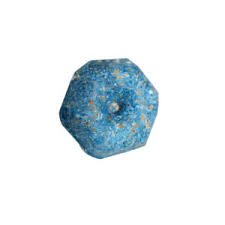
Celphos 1kg
Original price was: KSh10,000.00.KSh9,992.00Current price is: KSh9,992.00.
Celphos is an insecticide/fumigant for controlling various storage insect pests and rodents in raw grain, processed and packaged foodstuffs, and tobacco.
- Same-Day Delivery
- Product details
- Instant Delivery
- Product Availability
- Application or Installation
- How to Buy
- KRA ETims Available
Product details
Celphos is an insecticide/fumigant for controlling various storage insect pests and rodents in raw grain, processed and packaged foodstuffs, and tobacco.
Upon exposure to moisture in the air, Celphos tablets slowly release phosphine gas, which, when inhaled, causes the instant death of the pests.
Celphos is a trusted fumigant used for controlling stored product insect pests in various commodities. Celphos is a highly effective, economical, and easy-to-use fumigant worldwide.
Strong fumigant Celphos helps to prevent insect and rodent damage to stored grains and products. Applied appropriately, it produces phosphine gas that penetrates deeply into sacks and silos, providing quick, comprehensive pest management without producing dangerous residues. Lightweight and simple to manage, it has straightforward use instructions and safety advice. Perfect for farmers and storage facilities, Celphos guarantees your crop remains pest-free and fresh, minimizing losses and preserving food quality until it hits the market.
Celphos Composition
- Aluminium phosphide(57% w/w)
- Formulation: Tablet, weighing 3gms
- Registration: PCPB(CR) 0379
Celphos Dosage
10 gm / metric ton stored commodity in air air-tight condition or 2 to 4 pills of 3g / ton.
Celphos Mode of Action
Celphos, a fumigant insecticide, works by releasing phosphine gas. This gas is inhaled by insects and disrupts their cellular respiration, leading to their death. It’s primarily used for controlling stored product pests in various commodities and is known for its effectiveness, ease of use, and lack of residual effects on treated items.
Celphos is an insecticide that acts by contact, ingestion, and especially inhalation. It blocks the breathing of insects, causing death very quickly. Celphos comes in the form of a tablet, which metabolizes into gas when the packaging is opened, making it possible to treat even hard-to-reach volumes. Precautions for use: open the packaging with caution while being equipped with the appropriate protective equipment.
Advantages of Celphos
- No ozone layer depletion
- Occupational safety
- Effective against stored product pests such as eggs and pupae
- Safe and easy application
Benefits of Celphos
- Phosphine gas from Celphos is practically insoluble in water, fats, and oils and therefore has no appreciable reaction on the fumigated commodities.
- Phosphine gas disappears completely after fumigation from the treated area upon aeration.
- Phosphine from Celphos does not adversely affect the quality of agricultural commodities fumigated.
- It is rapidly deactivated by photolysis (effect of sunlight).
- Easy to use, economical, and highly effective fumigant.
- Eliminates all pests from stored foodstuffs
- No residual effect on treated foodstuffs
- Can be used at very low doses
- Product dedicated to fumigation professionals
Celphos Target Pests
Celphos Target Areas
Celphos Airing Out
- Following fumigation, there should be an airing-off period of at least four hours or until gas levels drop below the Occupational Exposure Standard.
- Once opened, the contents of the container must be used immediately.
- Unprotected persons must be kept out of treated areas until the phosphine concentration in the atmosphere has fallen below the Occupational Exposure Standard.
- After following the appropriate exposure times, the following minimum airing periods must be observed:
1. Rice, wheat, barley, maize, oats, sorghum, rye, millet, and oilseeds – four hours
2. Animal feed, flour, spices, confectionery, biscuits, dried fruit and nuts, and tobacco in cases or bales – two days.
3. Tobacco in hogsheads – three days.
Celphos Restrictions
- TO BE USED ONLY BY OPERATORS TRAINED IN THE USE OF ALUMINIUM PHOSPHIDE and familiar with the precautionary measures to be observed. See HSE Publication Fumigation: Health and safety guidance for employers and technicians carrying out fumigation operations.
- IN CASE OF FIRE. Use dry sand, powder, or CO2. Never use Water.
- Remains of containers must be removed after treatment and buried. All persons and animals must be kept out of the fumigation area and adjacent areas into which gas might penetrate.
- Do not use when the commodity temperature is below 15 °C and/or the relative humidity within the structure is high, or with row cereal grain, the moisture content should be less than 9%.
- Don’t fumigate in inhabited buildings.
- Don’t use on any commodity, empty containers, or vessels that are in transit.
- Don’t heap tablets.
- Don’t apply as a surface-only treatment in a structure whose height exceeds twice its width.
- Phosphine is also highly toxic to humans and warm-blooded animals.
Celphos Packaging
1 x Celphos 1kg
Instant Delivery
*When Will My Item be Delivered?*
When we say Same Day, we mean it. Same-day delivery can be a lifesaver. Get urgent parcels delivered to your doorstep now. All orders will ship to your doorstep immediately after payment is received. We pack and dispatch every item immediately and guarantee a shorter lead time as compared to waiting for days with other dealers which ensures very fast delivery, no out-of-stock cancellations, and guaranteed availability of products.
We try our best to ensure that all shipping and deliveries are sent out without unnecessary delays. We ship most of our products via the fastest courier services to your doorstep. We are not limited to any specific areas and we courier all over the world using:
Technicians, Riders, Sendy, Fargo Courier, Tahmeed, Chania, Classic Courier, Savo Store, Speedball Courier, Kentex Cargo, Wells Fargo, FedEx, DHL, Salihiya Cargo, G4S Kenya, Royal Parcel, Timeless Courier, EMS Kenya, Courier Plus, Runex Courier, Posta, Aramex, UPS, Skynet, Freight in Time, Mambo Express Courier, Afri Sali Air Cago, TNT, Seabourne Worldwide Express, African Salihiya, among others.
*Delivery Fees*
Customers within Nairobi, CBD can get their packages as fast as 30 minutes for kes 399 Only!
We deliver within 2 hours in Nairobi, Kiambu, Nakuru & Machakos counties for kes 399 Only!
Delivery to all other counties in Kenya takes 3 to 24 hours for kes 399 Only!
Delivery to East African countries takes 3 to 48 hours for kes 1,499.
All exports from Kenya to any country in the world take between 1 day to 7 days working days for kes 9,999. We’ll inform you of the cheapest and fastest courier costs.
*Customs, Duties, and Taxes*
We are not responsible for any customs and taxes applied to your order. All fees imposed during or after shipping (tariffs, taxes, etc.) are the buyer’s responsibility. Please note, most shipping companies include customs charges in the shipping costs, so you are 99% not likely to pay customs, duties, and taxes. The billed amount will be enough.
*Extra Shipping Cost*
Please be noted, that in unforeseen circumstances, after you place the order, our service staff may contact you directly and ask you to pay the extra shipping costs on top of the amount you have already paid for large or heavier products.
*Where are you located?*
-Branch 1: Kenya, Nairobi, Rahu House, 1st Floor, Suite 2, Mfangano Street. Opposite Eastmat Supermarket
-Branch 2: Kenya, Nairobi, Information House, 2nd Floor, S20, Hakati Road. Opposite Quickmart Supermarket
-Example of Successful Deliveries: https://rb.gy/daow3
-Government Certifications: https://t.ly/pdwck
Note: Our websites have accurate details, descriptions, pricing, and images of the actual product. And we’ve previously sold without complaints or mismatches.
Product Availability
This product is available. Feel free and confident to place your order, pay for it and we will deliver it immediately – same day.
If something is out of stock, we will refund your money immediately, or if you prefer we can deliver the product as soon as we stock up.
Application or Installation
We have fully qualified technicians who can mix and apply for you this insecticide or gel or dust or granules or install soap dispensers in washrooms or connect for your electronic items.
- We offer spray or gel or dust or granule application by a technician.
- We offer installation of items, eg fixing dispensers on walls with a drill.
- Our technicians are fully equipped with PPE.
- We have all the work tools needed for each installation, just ask.
- Your project will be done with the best equipment/tools.
- And, not to nag, you’ll be required to cater for transportation to and from the site.
Hire or Rent Our Tools:
- AICO Wet and Dry Vacuum Cleaner 20L @ Ksh 5,000
- Thermal Fogger 16L @ Ksh 7,000
- Qualified Operator or Technician @ Ksh 2,000
- Rechargeable 21V Makita Cordless Drill Kit @ Ksh 5,000
- Royce RH26-1150 Rotary Hammer @ Ksh 5,000
- Backpack Sprayer @ Ksh 5,000
- Bee Suit @ Ksh 5,000
- Cleaning Brushes (6) + Rechargeable 21V Makita Cordless Drill Kit @ Ksh 5,000
- Heat Gun @ Ksh 5,000
- Mist Blower @ Ksh 5,000
- Nano Gun @ Ksh 5,000
How to Buy
How To Order
Follow the steps below to ensure a smooth user experience when shopping online.
Imagine a store that is open 24 hours a day and 7 days a week for your convenience! All of this in the comfort of your very own home!
Step One – Browse and Search
Browse our online store.
Search for the product you looking for via our search bar, category menu, or side navigation bar. Once you found the product that you looking for, select your product, and click on add to cart.
Step Two – Add to cart
If you are looking to purchase more than one product, remember that you can continue browsing and adding more products to your shopping cart. After you selected all your products and added them to your shopping cart. Head over to your shopping cart and proceed to the checkout.
Alternatively, you can order directly through WhatsApp.
Step Three – Your Profile
If you are already a registered customer you may proceed to log in to your personal profile account. If you are not registered yet you may proceed to create a new account.
Step Four – Checkout Process
At the checkout page, you will be requested to complete the below details:
- Personal information
- Select your Shipping method and input your shipping address (Delivery to home or work address)
- Select your desired payment method and pay( M-Pesa Till, M-Pesa Paybill, Pesalink, Cheque, RTGS, Debit card, Credit card, Instant EFT, Cryptocurrency, or contact us for any assistance )
- Review your details and order
- Confirm and place your new order
Step Five – Customer Care Contacts You
Our customer care representative will immediately call or WhatsApp or email you about your order to your confirm details, receipt of payment, and organize delivery.
Step Six – Await your order
Your order number will be sent immediately via email once your order is placed and payment is confirmed. Delivery is instant, 24/7 using the fastest couriers. Tracking details will be sent via email or WhatsApp once the payment has been processed.
KRA ETims Available
Once payment is received, we issue KRA ETims Tax Invoices to our customers. Feel free to order and pay, and we will deliver.
You may also like…

Related products



-1%
-50%
-0%
Sold out